
(Updated 2026) Five Scholarly Books On Tarot History
Apprenticeship › Resources › Tarot History Books
Introduction
Since De Gebelin mistakenly mentioned tarot as coming from the Ancient Egyptians, speculation has abounded over the mysterious history of the cards. But the truth is far more simple. Tarot was a trick-taking game created for Italian elites in the early-mid 1300s. Nothing more, nothing less. The Renaissance symbolism on the original cards was simply a result of the artists drawing upon the popular culture of the time. In short, the mystery of tarot’s origins is no mystery at all.
In this article, I present four scholarly books on the tarot which delve into this history. All four of the books can be quite dry and I would not recommend them to you if you are beginning your study journey unless you are very much interested in historical details. These books are a welcome departure from the rank speculation and pseudo-scholarly works which claim to unveil the “mystical” or other origins of the practise of tarot divination as somehow coming from the Roma people (formerly known as the slur of ‘gypsies’) or Ancient Egypt or wherever else. Enjoy.
[New 2026] Spiritual Key To The Tarot (2025) by Tali Goodwin & Marcus Katz
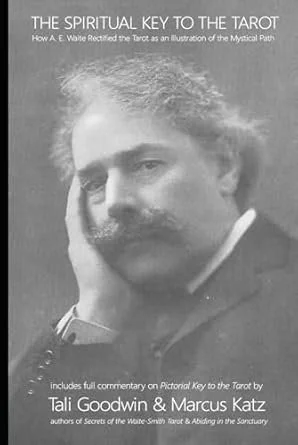
Spiritual Key To The Tarot (2025) by Marcus Katz & Tali Goodwin
Based on a decade of research and lifetime of Western Esoteric practicum, Goodwin & Katz explore in this work the long arcane Christian mystical influences behind the Rider Waite Smith tarot. Through a robust examination of Waite’s Pictoral Key To The Tarot (1911), they decode Waite’s various cryptic sayings and peel back the esoteric ideas behind Pamela Coleman Smith’s intuitive (in the ordinary sense of the word) images.
In early 2026, this work is not receiving the recognition that it deserves. It has not yet been discussed on r/tarot nor much reviewed on Amazon. This is a shame and I hope that the situation will change in the future.
The Tarot: Magic, Alchemy, Hermeticism And Neo-Platonism (3rd Edition) by Robert M. Place
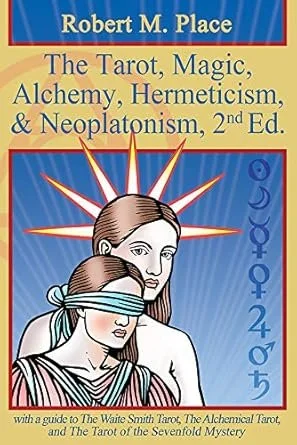
Robert M. Place is a tarot deck creator and author, known for creating tarot decks like The Alchemical Tarot and The Tarot of Sevenfold Mystery.
An expanded version of Tarot: History, Symbolism & Divination, Place gives here a lot of good contextual information on the history of the tarot (especially as relating to esoteric idea). I admit that I have only read the old title. But since I was impressed by the history section, I am very confident that Place’s updated work is even more worth buying. Following is a summary of the old title.
First, Place gives description of the various esoteric influences on the cards. It then goes through the Rider Waite Smith cards with some interesting scholarly notes. One stark example is Place’s note on the 7 of pentacles. Place says that the farmer is holding a hoe and that the card means profit and harvest. This is a meaning which may be foreign to a lot of Rider Waite Smith readers who consider the card to mean not the reaping of profit but the investment and patience required to eventually accumulate it. Place alludes to this popular idea of the card when he says that A.E Waite (the deck co-creator) mistook the hoe for a staff and thus associated the “staff” with desire.
I found the final section of the book on tarot divination unremarkable. This statement might sound negative but it’s basically praise because I do have a bit of a negativity bias. So if there was anything that I strongly disagree with factually or logically, it would have been noted.
Untold Tarot: The Lost Art of Reading Ancient Tarots by Caitlin Matthews
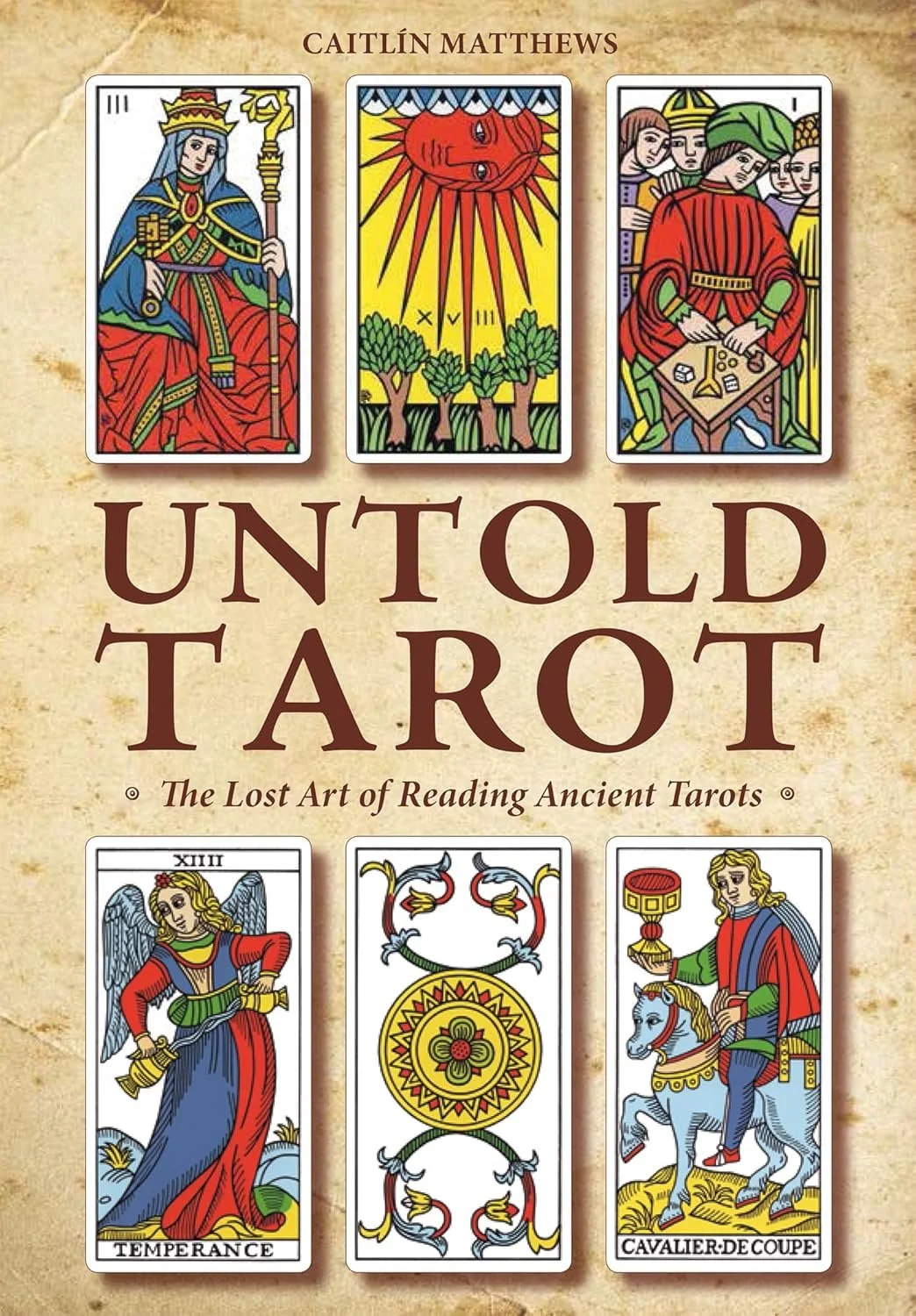
Untold Tarot: The Lost Art of Reading Ancient Tarots (2018) by Caitlin Matthews.
Caitlin Matthews is a prolific author and Western occult scholar.
In this book, Matthews looks at the old French and Italian decks which preceded the Rider Waite Smith tradition. Matthews gives a good scholarly history of tarot cards before turning to techniques of tarot divination as used since around 1730 (approximately half a century before Etteilla). These techniques include not just spreads but lines and tableaus. These older techniques make heavy use of abstract keywords, card imagery and intuition, amounting to something quite foreign from what many Rider Waite Smith readers will be used to.
Interested in practical books on tableaus? See Tarot Tableau Revolution (2025) by Maria Alvis Hernando (foreword Mary K. Greer) and Mastering the Tarot Tableau: Revising Predictive Accuracy With Tarot (2025) by Toni Savory.
The book does have a couple of errors and a few clunky phrases but these are by the way and I still highly recommend the book for those interested in tarot history.
Essential Tarot Writings: A Collection of Essential Source Texts in Western Occultism (2020) by Donald Tyson
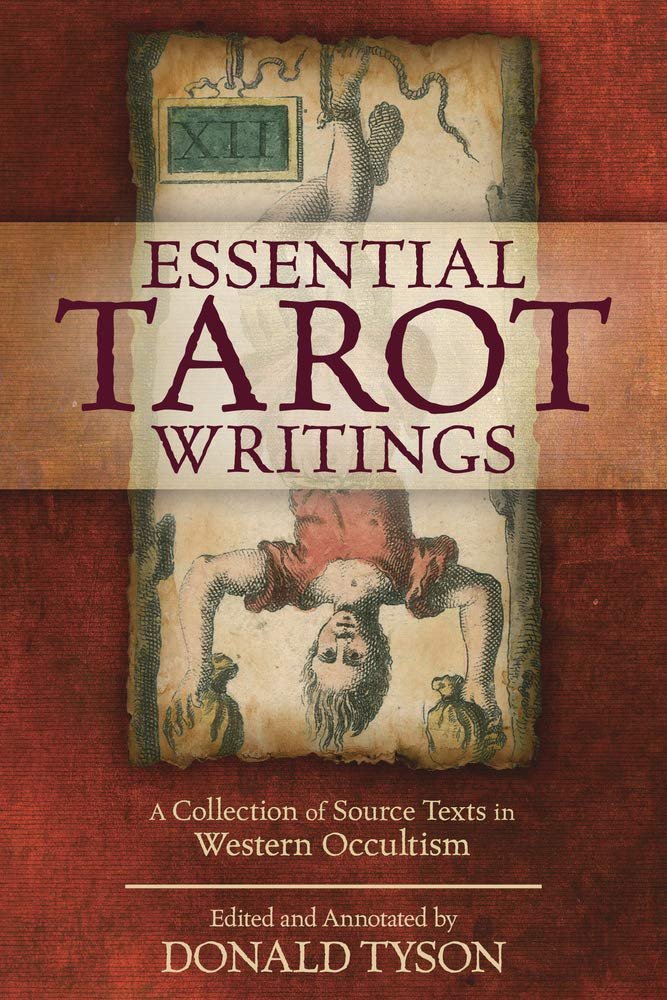
This book includes never before seen English translations of essays from French occultists writing on the tarot as well as some British occultists. It is essentially a book of primary sources which provides for the public some historical context on early tarot thought.
Nonetheless, the most notable section in my opinion is Tyson’s “corrected” (commentated) version of the famous Opening of the Key divination method. This is a very complex method famously taking hours and requiring five distinct “operations” or stages. Tyson’s commentary serves to guide the reader from misinterpretations of the originally released instructions, which can read ambiguous in certain places due to arcane use of language.
A History of the Occult Tarot (2013) by Decker and Dummett
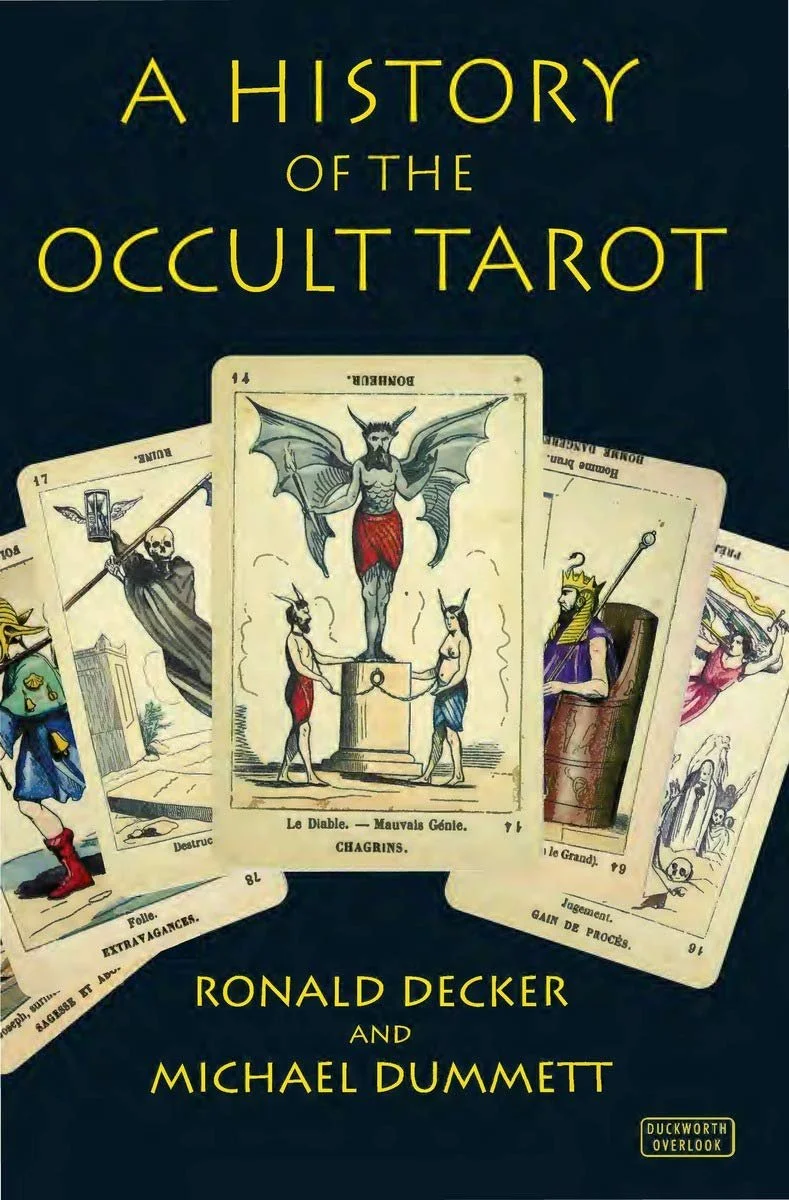
Front cover of the book, A History of the Occult Tarot (2013) by Decker & Dummett.
This book is controversial among tarot readers and occultists for a couple of reasons. The authors being atheist materialists, their approach comes across as confusing or foreign to some readers when the debunking of frauds is done with snark rather than factual dispassion.
Pat Zalewski, a high ranking Golden Dawn Adept, also gave a dismissive Amazon review of it in 2021.
Nonetheless, I don’t give these opinions too much credence: I think it is still worth reading if you want a dry academic look at a history of the occult tarot. Just be aware of Decker & Dummett’s academic, materialist perspective when you are reading it.
Continue Reading
Serious Tarot Resources
Looking for sensible ways to learn tarot card meanings without shortcuts? Want to learn about A.E Waite’s original celtic cross tarot spread rather than modern, psychologized versions? Wondering how to give free readings without giving up?
RWS Cards In Context Series
Master all 78 Rider Waite Smith cards with a look at their modern and original divinatory meanings in context. See how the RWS meanings apply across life areas, spread positions and key paired combinations.
Seeking a tarot mentor in 2026?
I run a five year tarot mentorship programme for Western occultists on the Right Hand Path (e.g. Hermeticists, Rosicrucians, Theosophists). Full details are in the prospectus: read it instantly by clicking the button below.
